Dotcom Vibes
What the headlines are missing when comparing 2025 to the Dotcom era.

Throughout 2025, media narratives frequently drew parallels to the Dotcom era, as the experts warned us of irrational exuberance, investment frenzies, looming crashes, misinformation, and the perils of a technological arms race.
Some of the warnings were indeed warranted. When breakthrough technologies arrive, money moves fast, future is unclear, opportunists rush in, and inevitably we see both spectacular successes and disastrous failures.
That's what the internet and mobile era, broadly 1990 to 2010, looked like. Growth was messy and chaotic because the internet was truly new. Nobody had a playbook. Lots of startups failed. Scams in the name of Dotcom were pervasive. A massive capital investment bubble inflated and then eventually burst.
But that mess also created a once-in-a-generation opening. A revolutionary technology was built in public, and it was early enough that regular people could participate. For me, that was the real vibe of the Dotcom era and that’s what 2025 resembles the most.
The internet and mobile connectivity didn’t just create new companies, they created new jobs, new careers, and new ways to live - forever changing how we communicate, shop, learn, and build communities.
Back then, the frontier technologies were internet and mobile connectivity. Today, they are AI and Crypto. Different tools, but a similar moment - with high uncertainty, high experimentation, breakdown of barriers, and room for creativity and individual agency.
In messy frontiers, disruption usually arrives sideways and unexpectedly. When the iPhone launched as an all‑in‑one gadget - phone, camera, music, and internet in your pocket - almost nobody predicted, “one day this will crush the taxi industry” - and then Uber happened.
I expect AI and Crypto will create many Uber moments over the next decade
Transformative technology disrupts not just because it's technically clever, but because it shifts power to the individual.
The internet and smartphones gave billions of people digital connectivity, the ability to publish information, the ability to find information, and the ability to establish borderless businesses online.
It didn’t guarantee success, but it gave everyone the tools and the right to try.
In 2025, developments in AI and Crypto are empowering individuals to learn, experiment, build, and transact on peer networks more freely than ever before.
AI gives people the freedom to learn and build
Until now, building anything — a business, a product, or even a school project — required a combination of money, connections, and specialized expertise. Without these, you either moved slowly or didn’t start at all.
AI changes that equation by acting as a force multiplier and filling in the gaps. It can help you learn a topic faster, brainstorm and refine ideas, write and edit more effectively, generate code and prototypes, automate repetitive tasks, and more.
AI won’t magically replace real skill, and it can absolutely be wrong. But it dramatically lowers the cost of getting started. And when the cost of trying drops, experimentation and creation explodes.
My Case Study: from idea to prototype in 5 minutes and zero cost
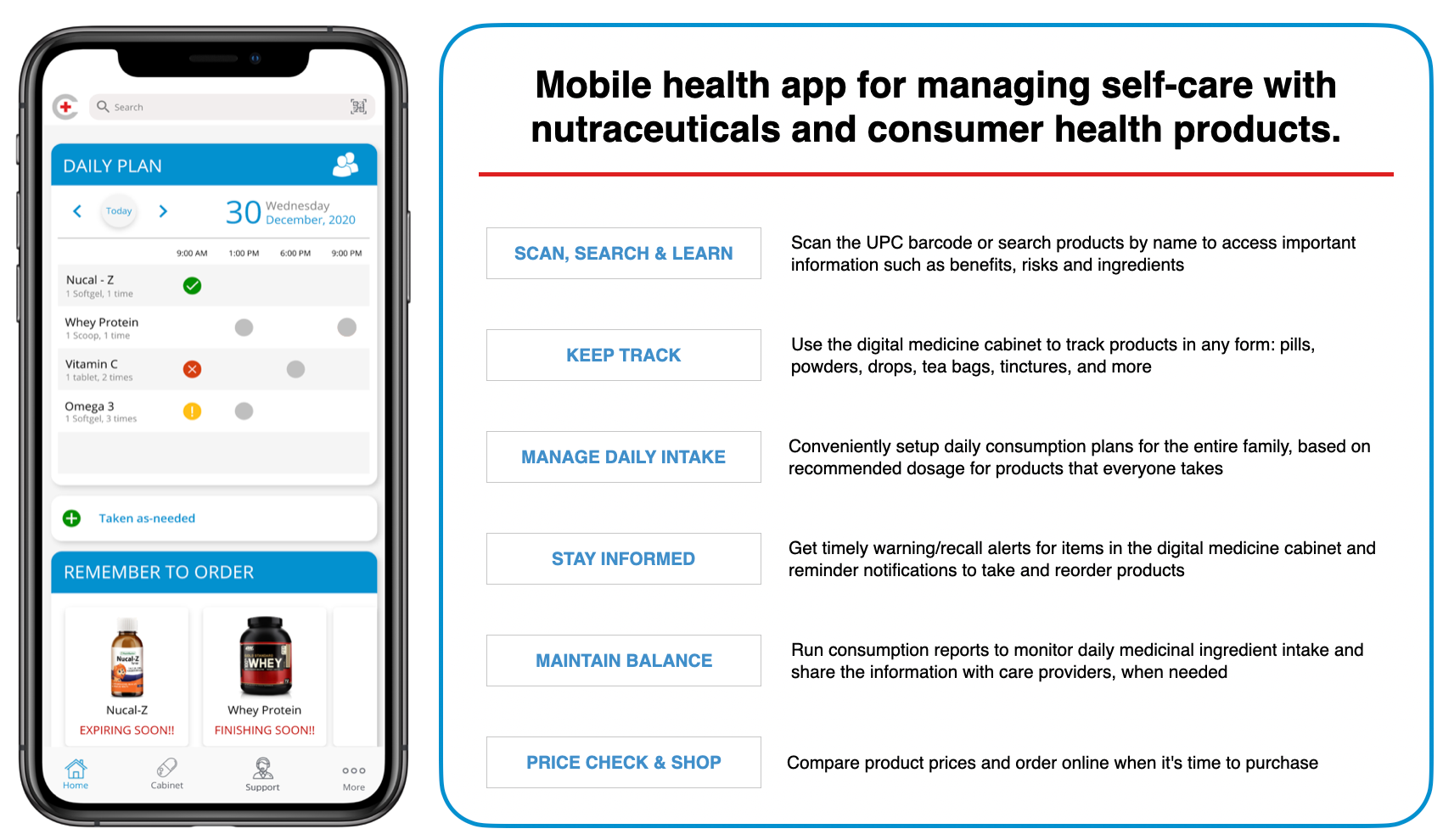
In 2020, I tried building Cabinet+, a digital medicine cabinet tracking app. Over a span of 8 months, I spent ~$15,000 in working with an offshore digital agency to create a very basic prototype for market testing. Ultimately, the app did not have a market fit, and the proof-of-concept failed in validation.
Today, modern AI tools would compress the time and cost of that early-stage work massively. In my latest test using Google Antigravity, I fed product specifications into the prompt and generated a working prototype in less than five minutes.
Even if the app was not production-ready, the shift is what matters: with AI, the cost and time required to test and validate my idea had collapsed to $0 and 5 minutes.
Crypto gives people ownership of assets and finance
Crypto is controversial for a reason. Because it deals with assets, ownership, and money, the sector has been a magnet for hype, scams, and speculation.
But behind the noise is an idealistic goal: decentralized public networks that enable users to not only read and write on the world wide web, but to also hold digital ownership claims.
As regulations clarify and blockchain technology matures, you'll be able to own digital assets, transact peer-to-peer, and not just access but also offer financial services on the internet, all without an intermediary.
No gatekeepers, no geographic restrictions - just an internet connection to decentralized applications (dApps) and their smart contracts - immutable agreements that execute on blockchain networks.
Not every project will succeed. In fact, the majority will fail. Lower barriers to entry inevitably lower the filters for quality. However, the significance isn’t that every project works - it’s that the underlying capabilities shift what is possible.
My Case Study: using Decentralized Finance (DeFi) for liquidity
Earlier this year, I was presented a lucrative venture capital opportunity to invest in the seed round of an AI startup solving a major problem in the healthcare space. Unfortunately, the capital call for this investment was on a tight deadline and required me to generate cash liquidity in a short timeframe.
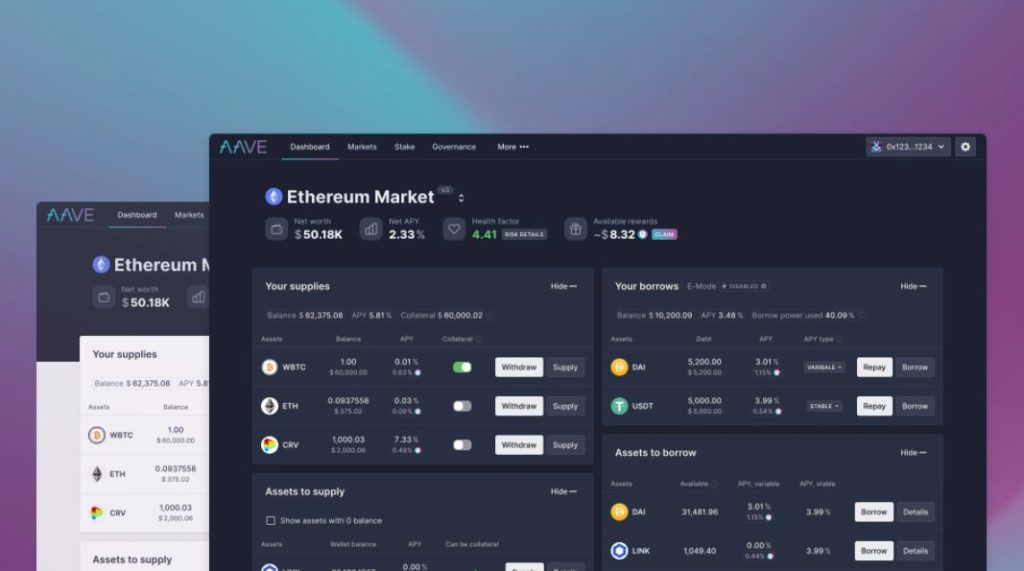
The solution for this challenge came from Decentralized Finance (DeFi). By depositing my digital assets as collateral on the Aave lending protocol, I was able to borrow USDC (USD Coin) stablecoin against it. No approvals. No applications. No KYC/AML delays.
The entire process was permission-less, executed via smart contracts, and took less than two minutes. The USDC helped meet the investment capital call on AngelList, which I'm happy to report - now accepts crypto - as every other platform will, in the near future.
Why does it matter?
If you are an entrepreneur or small businesses: you have more leverage than ever. AI can let a small team do work that once required a large company - research, marketing, customer support, prototyping, operations. Over time, blockchain tools may automate parts of operations and finance through smart contracts.
It’s increasingly plausible that a “billion dollar unicorn” can be built and run by a small team using AI and automation as force multipliers.
If you are a student or early in your career: your future may not follow a straight line. The old model - degree, one career ladder, retirement - is broken. The new reality will likely involve continuous learning, frequent reinvention, and jumping headfirst into career paths that don’t exist yet. AI gives you on‑demand learning (explanations, practice, feedback, guidance) and helps you bring ideas to life, faster and cheaper. Most of the work in blockchain is open sourced, so just access to GitHub can be enough to learn, fork, and build on your own.
Access to open technologies like AI and Crypto does not remove the need for discipline, perseverance, and critical thinking, but it does expand what you can teach yourself and build independently.
If you are an incumbent or gatekeeper: the rise of new open platforms is a an early warning - if your power comes from controlling access. Technologies that increase individual agency tend to shrink the domain of gatekeepers.
The survivors will be the ones who shift from being “controllers” to facilitators, trusted participants, infrastructure providers, and partners in value creation.
As old doors close, new ones will appear
Yes, there’s hype. Yes, there are scams. Yes, companies will shutter. Yes, some jobs will not survive. That comes with every major technological shift.
But the deeper story is that after years of stagnation within walled gardens, tech suddenly feels exciting and empowering again.
After decades, we are once again in a messy, high-risk, high-opportunity moment where the tools are new, the rules are forming, and creative enterprising people have a chance to shape the future.
The tools needed to unlock new doors and pathways to success are out in the open, and available for taking. Only one question remains: how will you lean in and take action?